

In The Beginning
Continual Revelation

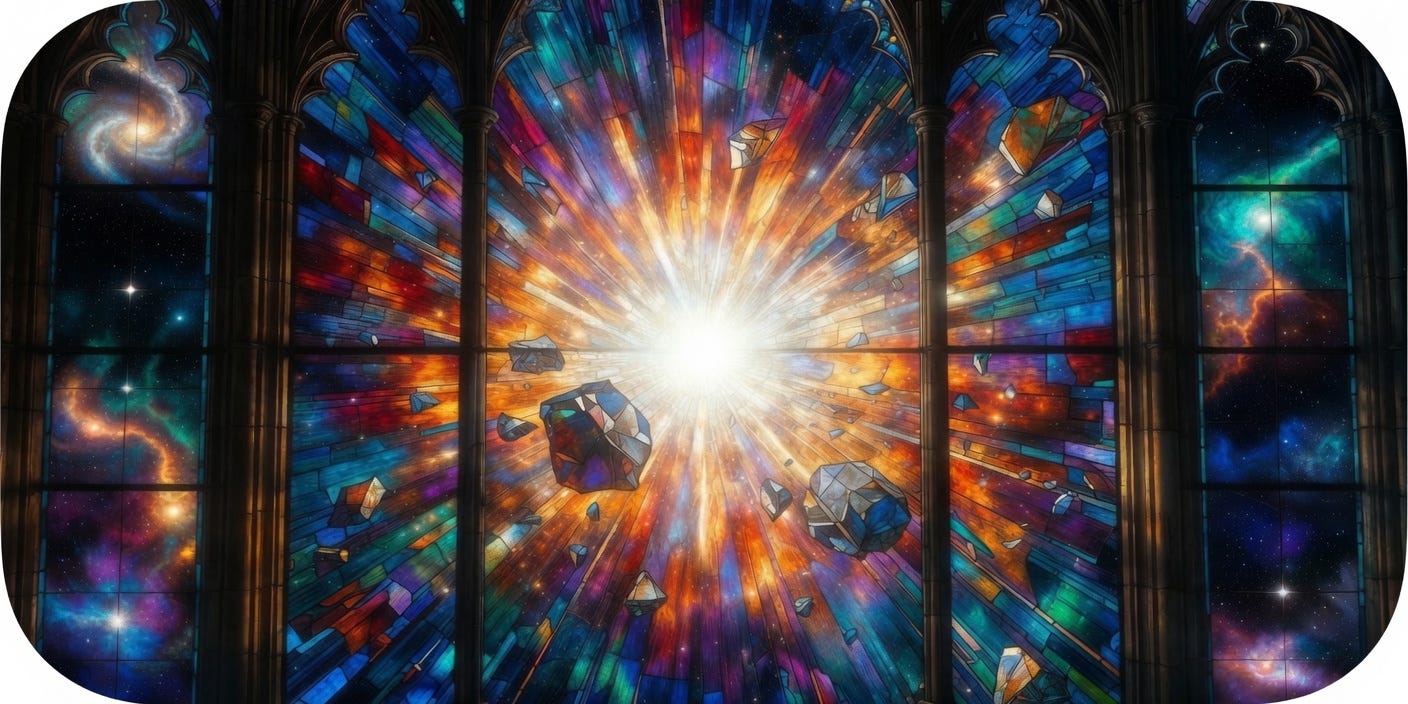
In the Beginning
There are awe-inspiring moments in sacred history when the veil between heaven and earth grows breathtakingly thin—almost translucent—like the shimmering vail of a bride as she meets her soon to be husband at the altar of marriage. In these radiant encounters, prophets are swept up into visions of the very unknown, the dazzling habitation of the living God: Ezekiel beholding whirling wheels of fire and sapphire thrones amid stormy winds and flashing lightning; Isaiah overwhelmed by the train of the Lord’s robe filling the temple as seraphim cried “Holy, holy, holy!”; John the Revelator gazing upon a crystal sea, emerald-encircled throne, and the Lamb at the center of uncreated light. Each prophet, to the best of their trembling human abilities and within the profound limitations of mortal language, struggled to recount the indescribable splendor they beheld—rivers of fire, living creatures full of eyes, golden lampstands, and the radiant mercy seat where heaven’s very presence rested.
And yet, in this beautifully limited way, their words have not only enriched our vision of the Almighty but have painted an irresistible invitation: to press beyond the outer court of casual knowledge, through the Holy Place of disciplined worship, and into the fullness of the Most Holy Place where God chooses to dwell with us. These glimpses beckon us today—amid our own wilderness journeys—to delve deeper, to quiet our hearts, to hunger for the same transformative encounter. As we do, the Holy Spirit stands ready to pull back the veil in our lives, filling us with the very glory witnessed by the prophets: not mere information about God, but an immersive, relational experience of His holy presence, guiding, purifying, and empowering us toward the ultimate dwelling—the New Jerusalem where “the tabernacle of God is with men” forever (Revelation 21:3). Will you step closer? The cloud still moves, the fire still burns, and the invitation to experience the fullness of God’s Spirit remains open.
The Tabernacle as a Capstone.
The Tabernacle stood as the capstone of progressive, personal revelation God gave His people immediately after the Exodus. When Israel left Egypt, they carried patriarchal traditions from Abraham (altars, covenant promises, circumcision, simple offerings) alongside heavy Egyptian cultural and religious influences (polytheism, idolatry, hierarchical systems, and possibly syncretized practices[Syncretized practices refer to the blending, merging, or fusion of elements from different religious, cultural, or spiritual traditions into a new hybrid system—often resulting in a compromised or diluted form of the original faith.]). The golden calf incident (Exodus 32) revealed how quickly those influences resurfaced. God therefore did not hand them a complete religious system at once. Instead, He revealed Himself and His will step by step in the wilderness—through visible acts of power, daily provision, leadership validation, moral law, and finally the Tabernacle itself—so they could learn dependence, holiness, and how to approach and hear from the true God.
This sequence (Manna → Water from the Rock → Aaron’s rod → Ten Commandments → Tabernacle) built a foundation. Manna taught daily trust and that “man does not live by bread alone” (Deuteronomy 8:3). Water from the Rock taught to never underestimate God’s ability to bring living water and hope from nothing and exact obedience matters (Numbers 20). Aaron’s budding rod validated God-appointed leadership and priesthood amid rebellion (Numbers 17). The Ten Commandments established the moral covenant. The Tabernacle then provided the living center where God’s presence would dwell and continual revelation would flow through appointed servants (Moses, priests, later prophets). It was never meant as a static monument but as a mobile, dynamic interface between a holy God and a redeemed yet immature people.
How the Tabernacle Embodied Revelation
The Tabernacle embodied revelation because its very design, materials, layout, and furnishings were not human inventions. God gave, through a heavenly vision, Moses the precise “pattern” (tabnit) on Mount Sinai (Exodus 25:8–9, 40; Hebrews 8:5). Every detail was pregnant with symbolic meaning.
Divine origin and exact specifications: God dictated dimensions, materials (gold for divinity/purity, silver for redemption, bronze for judgment and endurance, acacia wood for resilient humanity, fine linen for righteousness, specific colors—blue for heaven, purple for royalty, scarlet for blood/sacrifice), and construction methods. Spirit-filled craftsmen (Bezalel and Oholiab, Exodus 35:30–35) executed it. This itself revealed that true worship and relationship with God must come from His revealed pattern, not human creativity or Egyptian-style grandeur.
Tripartite sacred progression: The Tabernacle’s layout was far more than clever architecture—it created a deliberate, visual, and deeply experiential journey into the very heart of God. From the moment a worshipper entered the outer court—open and accessible to every Israelite—it invited them to begin where all true relationship with God must begin: at the place of atonement and cleansing. Here, in the broad, sunlit courtyard, the daily realities of sin and the urgent need for forgiveness were confronted head-on. Progressing inward to the Holy Place, reserved for priestly service, one entered a realm of intimate, ongoing communion with the living God—daily tending the golden lampstand so that the light of our spiritual life with Him, that constant, unbroken communication and illumination of the Holy Spirit, would never go out in the darkness of the wilderness; refreshing the table of showbread by consuming the Word of God afresh each day for our spiritual sustenance and strength, just as the twelve loaves were renewed weekly before the Lord; and offering incense on the golden altar, our constant prayers and intercessions rising like sweet fragrance not only for ourselves but for all those around us—family, community, and the wider world still wandering in spiritual night. Finally, beyond the veil lay the Most Holy Place, the restricted throne room of God’s direct presence, approachable only once a year by the high priest, and only with blood.
This sacred progression embodied a profound truth: approaching God requires progressive purification, mediation, and surrender; one cannot rush into His full presence unprepared. It mirrors the call for each of us today to advance day by day toward the center of God’s heart. Just as Israel could not remain camped indefinitely in the outer court of mere survival after leaving Egypt, we are invited—indeed commanded—to move forward on our personal wilderness journey. Each morning presents a fresh opportunity to pick up the metaphorical implements of the Tabernacle and take another step inward: dealing honestly with sin, pursuing cleansing, walking in the light of God’s Word, feeding on His presence, and offering the incense of prayer. This daily striving draws us ever closer to the mercy seat, where transformative encounter awaits. The path is not for the casual or impatient; it demands consistent obedience, humility, and reliance on the Holy Spirit. Yet every step forward brings greater intimacy, greater light, and greater power for the journey ahead.
The furnishings as daily instruments of progress:
Bronze Altar: Positioned immediately inside the gate, this massive altar of sacrifice embodied the non-negotiable necessity of blood atonement and substitutionary sacrifice to deal with sin. It stood as a constant reminder that without the shedding of blood there is no remission (Hebrews 9:22). For us, this calls for daily surrender at the altar of the heart—laying down pride, selfishness, and known sin, and trusting in the once-for-all sacrifice of Christ while continually offering ourselves as living sacrifices (Romans 12:1). Each day we choose to return here, we take a decisive step away from bondage and toward freedom.
Bronze Laver (made from women’s mirrors): Crafted from the polished bronze mirrors the women donated, this basin invited washing before priestly service. It embodied daily cleansing and sanctification—looking honestly into the mirror of God’s Word to see our true condition and being washed by the water of the Word and the Spirit (Ephesians 5:26; James 1:23–25). In our daily progression, we must pause here regularly to examine ourselves, repent of hidden defilements, and be renewed—moving from outward appearance to inner purity.
Golden Lampstand (Menorah): Beaten from a single piece of pure gold, its seven branches burned continually with olive oil. It embodied the enduring light of God’s Word and the illuminating presence of the Holy Spirit (Psalm 119:105; Revelation 1:12–20). Day by day, we must tend this light in our lives—meditating on Scripture, depending on the Spirit’s guidance, and refusing to let our lamps grow dim in the wilderness darkness. This light not only reveals the next step but drives away the shadows of confusion and syncretism.
Table of Showbread (12 loaves, renewed weekly): Fresh bread was placed before the Lord every Sabbath, representing God’s continual provision and covenant fellowship with all twelve tribes. It powerfully foreshadowed Christ, the Bread of Life (John 6). In our daily walk, we return to this table to feed on Jesus Himself through prayer, worship, and the Scriptures—sustaining our souls for the journey and reminding us that we do not travel alone but in covenant community.
Altar of Incense: Standing just before the veil, this golden altar carried the perpetual rising of sweet-smelling smoke—symbolizing the prayers and intercession of God’s people ascending acceptably before Him. It calls us to a life of unceasing prayer and worship (1 Thessalonians 5:17), where our praises and petitions become a fragrant offering that draws us ever nearer to the veil.
By intentionally engaging these metaphorical implements each day—returning to the altar of repentance, the laver of cleansing, the lamp of illumination, the table of communion, and the altar of prayer—we actively progress toward the center, the Most Holy Place of intimate fellowship with God. This is the essence of the Tabernacle’s ongoing revelation: not a one-time event, but a lifelong, daily journey from the outer edges of redemption into the radiant heart of the Father. The same cloud that guided Israel still moves; the same fire still burns. Will you take the next step today?
Ark of the Covenant + mercy seat: Embodied the covenant (tablets of law), validated authority (Aaron’s rod), heavenly provision (jar of manna), and atoning presence where God “met” with Moses “face to face, as a man speaks to his friend” (Exodus 33:11). The empty mercy seat (no idol) powerfully embodied pure monotheism and invisible-yet-present deity, countering Egyptian idolatry.
Furnishings as embodied theology:
Portable/mobile design: Unlike later fixed temples or Egyptian monuments, the Tabernacle could be dismantled and carried. It embodied that God journeys with His people through the wilderness of life rather than remaining distant or confined. His revelation travels with them.
Absence of images: No carved likeness of God appeared anywhere. This embodied the second commandment and the truth that revelation comes through word, presence, and appointed mediation—not visual idols.
These elements collectively revealed core realities: human sinfulness and need for atonement, the requirement of holiness, God’s desire to dwell among His people, and the structured path to intimate relationship.
How the Tabernacle Represented Continual Revelation
Beyond embodying static truths, the Tabernacle functioned as the ongoing locus of divine communication and guidance.
Visible cloud and fire (Shekinah glory): Once set up, the cloud of God’s presence covered the Tabernacle by day and fire by night (Exodus 40:34–38; Numbers 9:15–23). When the cloud lifted, Israel journeyed; when it remained, they camped. This was continual, visible, collective revelation of God’s will for their movements and timing—direct leadership for the entire nation through the wilderness.
Place of meeting and speaking: God regularly met Moses at the Tent of Meeting and later spoke to him from above the mercy seat in the Holy of Holies (Exodus 25:22; Numbers 7:89). This represented ongoing, intimate dialogue between God and His appointed servant. For the people, it centralized revelation through Moses and the priests rather than scattered oracles or Egyptian-style divination.
Urim and Thummim: Placed in the high priest’s breastplate (Exodus 28:30), these served as a mechanism for inquiring God’s specific will on decisions, disputes, battles, or leadership matters (Numbers 27:21; 1 Samuel 28:6). They represented a continuing channel of revelatory guidance for governance and direction.
Hub for appointed servants and prophets: The Tabernacle made concrete God’s method of directing His people “personally… through his appointed servants and the prophets.” Moses received direct, face-to-face revelation there from above the mercy seat (Exodus 25:22; Numbers 7:89), speaking with God as a friend. Priests, particularly the high priest, mediated on behalf of the people through the daily rituals, offerings, and the sacred instruments of inquiry. Central among these were the Urim and Thummim, placed within the breastplate of judgment over the high priest’s heart (Exodus 28:30; Leviticus 8:8). These mysterious, God-ordained objects—understood as instruments of “lights” (Urim) and “perfections” or “completeness” (Thummim)—enabled the high priest to discern the Lord’s will in specific matters. God worked through them to illuminate truth for His people as He saw fit, revealing aspects of the past (such as identifying guilt or clarifying hidden circumstances, e.g., in cases of suspected wrongdoing or disputed claims), the present (current standing before God, leadership decisions, or immediate courses of action), and the future (guidance on battles, territorial boundaries, journeys, or strategic moves toward the Promised Land). This knowledge was not exhaustive or mechanical but sovereignly granted—perfect light and perfect direction that guided the nation toward righteousness, covenant truth, and ultimate inheritance, always calling them back to obedience and dependence on the Lord rather than human wisdom or Egyptian-style divination.
Prophets augmented and continued these “updates” from God, functioning in connection with the central sanctuary. While the Urim and Thummim provided structured, priestly inquiry for concrete decisions (as seen in Joshua 7, 1 Samuel 14, or Numbers 27:21), prophets delivered broader, dynamic revelation—exposing how the people were doing, whether they were straying far from the path through idolatry or injustice, or walking in obedience to God’s guidance and directions. They called for repentance, clarified the deeper meaning of the law and rituals, and pointed toward future hope and judgment. Together, this system prevented chaotic or individualistic “revelation” that could lead to confusion, syncretism, or rebellion (as nearly happened with the golden calf). Instead, it provided orderly, accountable, and communal access to the living voice of God—centered in the Tabernacle as the hub where heaven met earth, ensuring that direction flowed through divinely appointed channels for the good of the entire covenant community.
This integration of priestly tools like the Urim and Thummim with prophetic ministry reinforced the Tabernacle’s role as the beating heart of continual revelation: a place not just of ritual but of real-time relationship, correction, encouragement, and forward movement in God’s purposes.
Integration with the Earlier Revelations and the People’s Context
The Tabernacle “topped off” the sequence. Manna had already taught daily dependence on heaven’s provision. Aaron’s rod had confirmed priesthood and authority. The Ten Commandments had given moral foundation and covenant terms. The Tabernacle then supplied the dwelling place for that law and presence, plus the ongoing mechanisms (cloud/fire, oracles, rituals, priestly mediation) for continual guidance.
For a people exiting slavery with mixed traditions—patriarchal memories from Abraham blended with centuries of immersion in Egyptian polytheism, idolatry, hierarchical temple cults, and ritual magic—this was essential. Egyptian religion centered on massive, immovable stone temples (such as those at Karnak or Luxor) that served as luxurious houses for multiple gods, complete with elaborate idol statues believed to house divine presence, secret inner sanctuaries accessible only to elite priests and Pharaoh, and practices steeped in magic, incantations, spells, amulets, and manipulative rituals designed to compel or appease the gods for personal or state benefit. The common people were largely excluded from direct temple worship, relying instead on home altars, festivals, and magical practices, while the system reinforced a rigid social and religious hierarchy under divine kingship.
In stark contrast, God gave Israel a portable, God-revealed Tabernacle system that was ethical, strictly monotheistic (with no carved images of deity whatsoever), and centered on covenant relationship rather than magic or manipulation. It replaced fixed monuments to distant or capricious gods with a mobile dwelling place where the one true God chose to travel with His people through the wilderness, making His presence visibly known via the cloud and fire. It taught them that revelation is not merely information, secret knowledge, or ritual technique to control divine forces, but a transformative encounter—requiring holiness, blood sacrifice for atonement, obedience to revealed moral law, and willing participation from the whole community through structured yet relational access. Disobedience could cause the glory to depart (foreshadowed later in Israel’s history, e.g., Ichabod in 1 Samuel 4:21). Revelation was relational and conditional on covenant faithfulness, fostering dependence on God’s word and presence rather than on priestly intermediaries wielding esoteric power or on syncretized Egyptian influences like the golden calf.
This divine pattern dismantled the old Egyptian framework while redeeming elements of familiarity (such as skilled craftsmanship and tent-like structures known from Egyptian camps or shrines) for holy purposes, training Israel to become a distinct kingdom of priests who would model true worship to the nations.
Ultimately, the temporary, mediated Tabernacle points to the eternal reality: the New Jerusalem, where “the tabernacle of God is with men, and he will dwell with them” directly (Revelation 21:3, 22—no temple needed). God’s progressive revelation moves from wilderness tent to incarnate Son to indwelling Spirit to face-to-face dwelling in the renewed creation.
In summary, the Tabernacle both embodied divine truths in its God-given design and represented ongoing revelation through its visible presence, oracular functions, priestly mediation, and rhythmic worship. It met the urgent need of a people leaving Egypt with incomplete traditions by giving them a tangible, mobile center where God would personally direct them through His servants—day by day, journey by journey—while pointing forward to the ultimate, unmediated dwelling of God with His people in Christ and the New Jerusalem.
This structure was both gift and teacher: it revealed who God is, how to approach Him, and how to walk with Him continually in the wilderness between deliverance and full inheritance.
Thanks for stopping by again and sharing your time with me.
Signing off till next time.
Silver